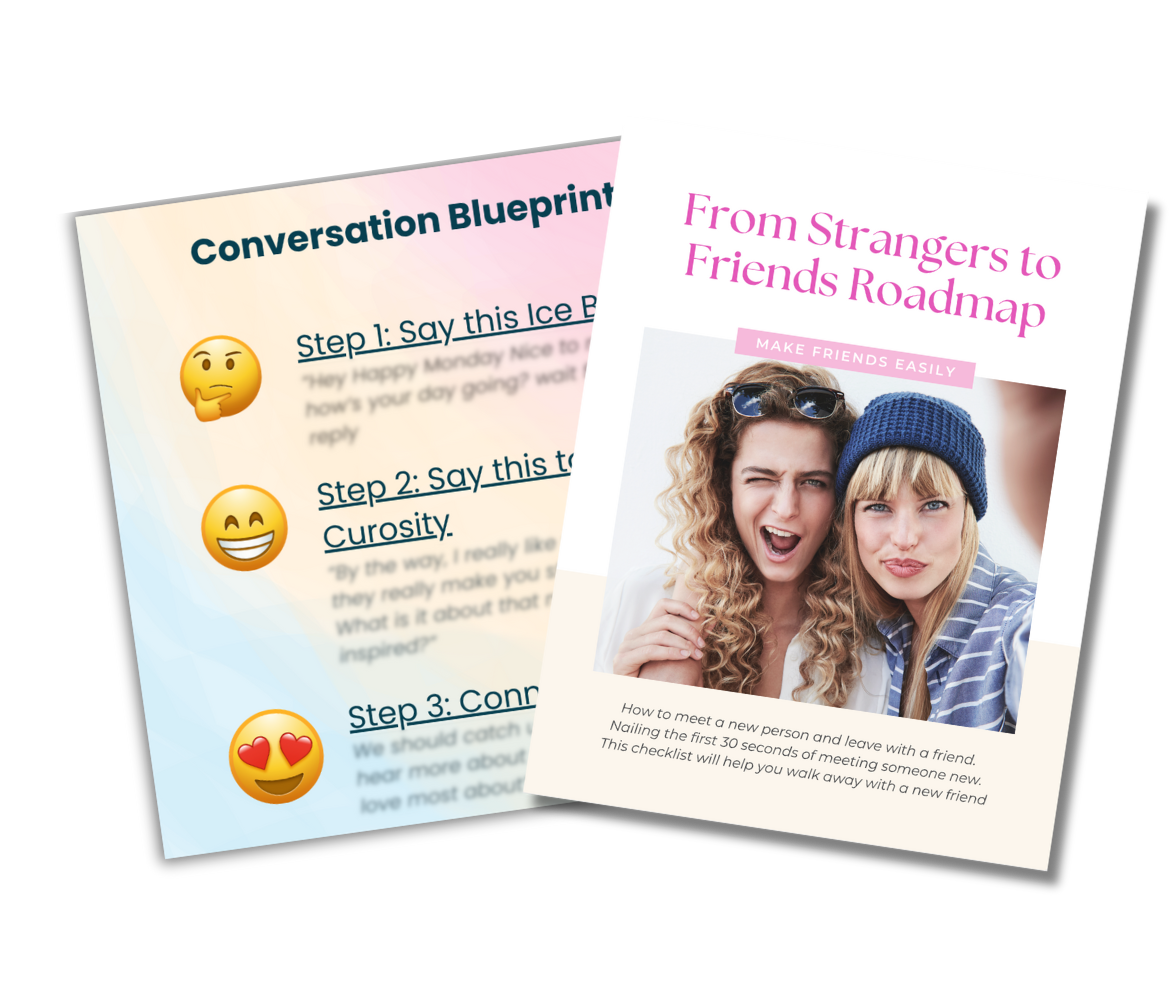
Make Friends Easily

The “Third Exposure” Secret That Quietly Turns Strangers Into Friends

Even if you're quiet, rusty, or haven't made a new friend in years

It's not charisma. It's not confidence. It's not “putting yourself out there.”

It's a five-step sequence that almost nobody ever teaches — and once you see it, you'll understand exactly why friendship always felt so hard...

...and why it's about to feel almost embarrassingly easy.
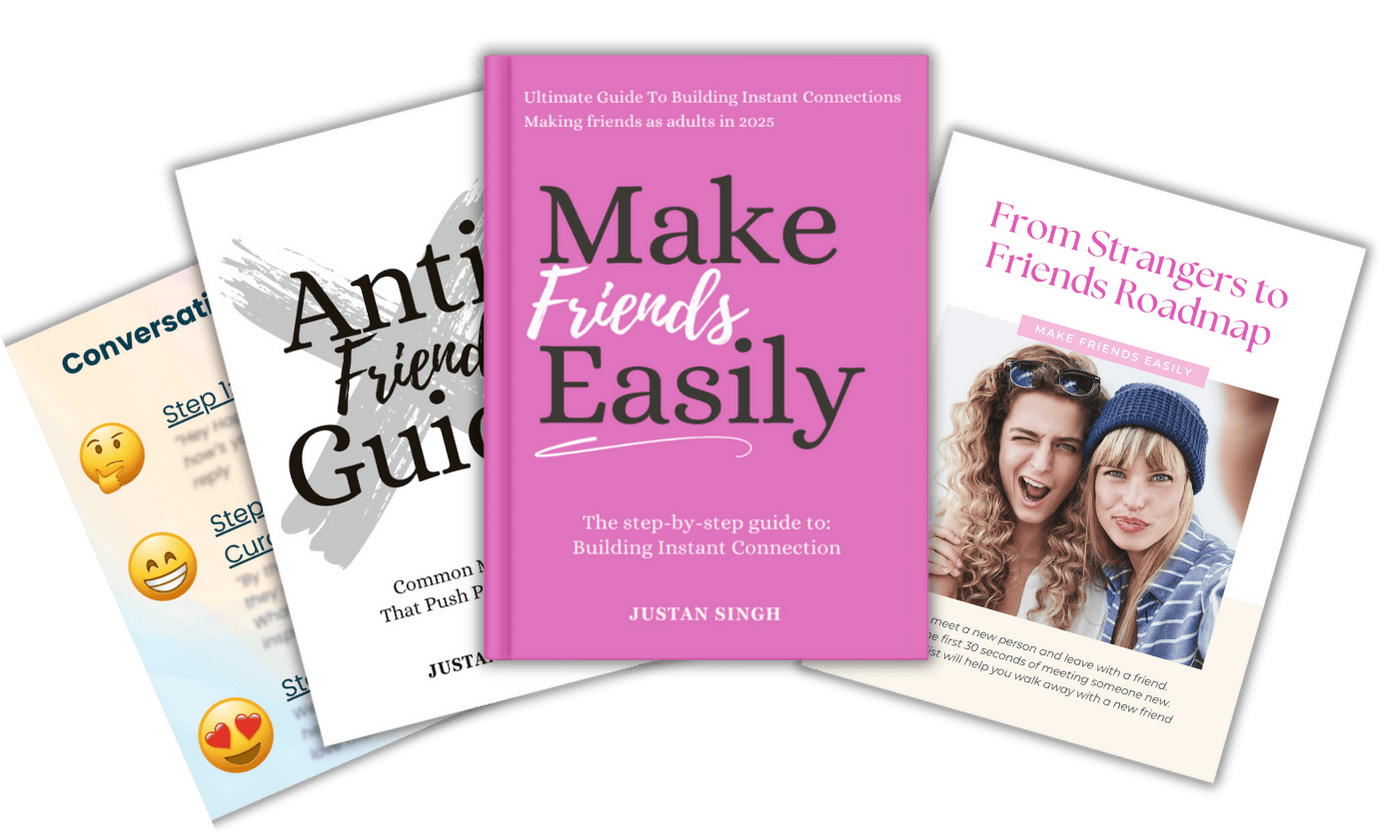
Make Friends Easily ebook and friendship resources
The moment nobody warns you about

There's a moment that happens to almost every adult.

Mine happened on a Saturday night.

I was scrolling my phone — four hundred and eleven contacts — and I realised something that made my stomach drop:

There wasn't a single person I could call and say, “I'm bored. Come over.”

Not one.

I had coworkers. I had old college friends scattered across three time zones. I had a group chat that used to be funny and had quietly become a place where someone posted a meme every six weeks and nobody answered.

And I remember sitting there thinking:

When did this happen?

Because nobody warns you about this part of adulthood.

Nobody sits you down at twenty-five and says: “From here on out, friendship stops happening to you. School is over. The built-in structure is gone. If you want friends now, you have to know how to build them on purpose — and nobody is going to teach you how.”

And the strangest part?

It's not that you're unlikeable.

People at work like you. The barista likes you. When you actually end up in a conversation, it goes fine — sometimes even great.

And yet somehow... nothing sticks.

You've probably lived this

You Meet Someone. You Click. And Then...

You talk for forty minutes. You both say the magic words:

“We should totally hang out sometime.”

And then you never see them again.

Maybe this is your version

Adult friendship can disappear so quietly you barely notice it happening.

Maybe you moved to a new city and six months later realised your only real relationship is with the guy who makes your coffee.

Maybe all your old friends got coupled up, had kids, moved to the suburbs — and slowly became people you see twice a year at birthday dinners where everyone talks about mortgages.

Maybe you work from home now, and some weeks the longest conversation you have is with the self-checkout machine.

Or maybe you've seen photos of people you know having the exact life you want: the group trip, the standing Thursday dinner, the inside jokes with years of history behind them.

“How do people get that? Where do you even buy a ticket to that?”

Here's what nobody tells you: there is a ticket. There's a whole system. And it's learnable.

Why the usual advice fails

The standard friendship advice is almost useless.

“Just put yourself out there.”

Out where? Doing what?

This advice gets you standing at the edge of a bar or meetup, holding a drink, pretending to check your phone, going home alone and wondering what you did wrong.

“Join a gym. Join a class. Join a club.”

This can work — because repeated proximity matters.

But proximity is only step one. Millions of people attend the same class for two years without becoming friends. Being in the room is not the skill.

“Become more charismatic and confident.”

Now instead of one problem — no friends — you've got two: no friends and the exhaustion of performing every time you leave the house.

“Try a friend-finding app.”

An app might get you to a table with a stranger. It doesn't tell you what happens in the weeks after that meeting — which is where friendship is actually built.

The accidental discovery

Then I did something slightly obsessive.

I took a notebook and wrote down every friendship I'd ever made as an adult.

The ones that worked. The ones that died. Twenty-something names going back years.

I mapped where we met, what happened next, how many times we saw each other and what changed between one interaction and the next.

And a pattern jumped off the page so clearly I actually laughed.

Every friendship that survived had travelled through the same invisible sequence.

Not similar.

Identical.

The Familiarity Ladder

Friendship isn't a personality test.
It's a sequence.

Rung 1 Stranger
Rung 2 Familiar Face
Rung 3 Almost-Friend
Rung 4 Friend
Rung 5 Real Friend

Exposure one: you're strangers. A short, low-stakes interaction. Nothing impressive needs to happen.

Exposure two: you're familiar faces. Recognition. A callback to the first meeting.

Exposure three: something small shifts. A piece of real information gets traded. A micro-invitation becomes possible.

That third exposure is where the door to friendship begins to open.

The friendships that disappeared tended to skip a rung: too deep too quickly, or one brilliant first meeting with no second exposure to keep it alive.

The engine underneath the ladder

Familiarity is not the enemy of friendship. It's the raw material.

Psychologists call one part of this the mere exposure effect: repeated exposure can increase familiarity and liking.

Which means making friends was never about becoming impressive.

It's about creating the right repetition, at the right depth, at the right time.

I'd had it backwards.

I thought friendship was a test I kept failing.

It's not a test.

It's a sequence. And sequences can be learned.

Make Friends Easily ebook
Introducing

Make Friends Easily
The Familiarity Ladder Method

The complete five-rung sequence — Stranger, Familiar Face, Almost-Friend, Friend and Real Friend — with the moves, language and timing for each stage.

No performing. No fake confidence. No pressure to become a social butterfly.

Just the sequence, rung by rung, until connection becomes something you can build deliberately instead of waiting for luck.

Inside the guide

Here's just some of what you'll discover.

  • The 8-word opener designed for gyms, cafés, dog parks and everyday places — so starting the first interaction doesn't feel like walking onto a stage.
  • Why the first meeting may be the worst place to try to be interesting — and what to focus on instead.
  • The Callback Move: a simple second-exposure technique designed to turn “I've seen you before” into genuine familiarity.
  • What to do when your mind goes blank mid-conversation — including a simple recovery move that helps you stop panicking about what to say next.
  • The Micro-Invitation: how to create the third exposure without making the invitation feel heavy or overly formal.
  • The friendly behaviour that can accidentally read as neediness when used too early — and how to pace warmth instead.
  • Where do I even meet people? The environments where repeated contact happens naturally — and the places where creating friendship tends to be much harder.
  • A practical 30-day new-city ramp for creating repeated opportunities to see the same people again.
  • An introvert-friendly pacing approach designed around a small number of social outings rather than trying to be “on” every night.
  • The Group Chat Trap: why getting added to a chat doesn't necessarily mean you've become part of the group — and what helps move the relationship forward.
  • What to do when someone says “we should hang out sometime” so a vague intention has a chance of becoming a real plan.
Who this was created for

This is for decent people who somehow ended up socially stranded.

Maybe you moved.

Maybe your old friendships drifted.

Maybe remote work quietly removed the people you used to see every day.

Maybe you're quiet, a little rusty, or perfectly fine once a conversation starts — but terrible at getting one started.

You don't need another personality. You need the manual nobody handed you.

This is not for manipulation tactics, pickup-style social games or ways to impress rooms full of strangers.

It's about stopping the performance and learning how connection actually grows.

Instant digital access

Start Learning The Familiarity Ladder Tonight

Make Friends Easily: The Familiarity Ladder Method gives you the core sequence, rung-by-rung guidance and practical exercises for putting the method into use.

You could spend another year hoping friendship happens naturally.

Or you can start learning the sequence tonight.

Make Friends Easily ebook
$19

One payment. Instant access.

Yes — Show Me The Sequence →

One-time payment · Instant digital delivery

A skill anyone can learn

Build stronger friendship bonds with small, natural actions

You do not need to become louder, funnier or more extroverted. You simply need to understand the small moments that make another person feel connected to you.

These friendship-building skills can be used in ordinary conversations and may only take a few minutes to begin practising.

  • No awkward scripts to memorise
  • No pretending to be someone you are not
  • No waiting years to become naturally confident
Friends enjoying an easy conversation
Make Friends Easily digital book
Inside the complete guide

Your step-by-step system for creating closer connections

Each chapter gives you a practical friendship skill, explains why it works and shows you how to use it in real conversations.

There is no vague advice to “put yourself out there.” You will know what to notice, what to do and how to create the next friendship moment.

1923 Students coached
50+ Success stories and testimonials
32 Years Studying human connection

Plus These 2 Exclusive Gifts To Help You Nail That Inital Conversation

Common Mistakes That Push People Away
(Value $47)

My Gift To You

The Anit-Friend Guide will highlight the unconscious behaviours that keep people away

In this guide, I show you how to fix the hidden signals that trigger cortisol in people you just meet

Nailing The First Catch Up Blueprint
(Value $57)

My Gift To You

The conversation blueprint that tells you step by step what to say

It primes you with written guidelines on how to make that first impression last!

Value $151

Yours for only $19